Water Extraction in Tampa, FL
Information about removing standing and absorbed water quickly and safely. This page explains the situation, what property owners can do safely, and when professional restoration assistance may be appropriate.
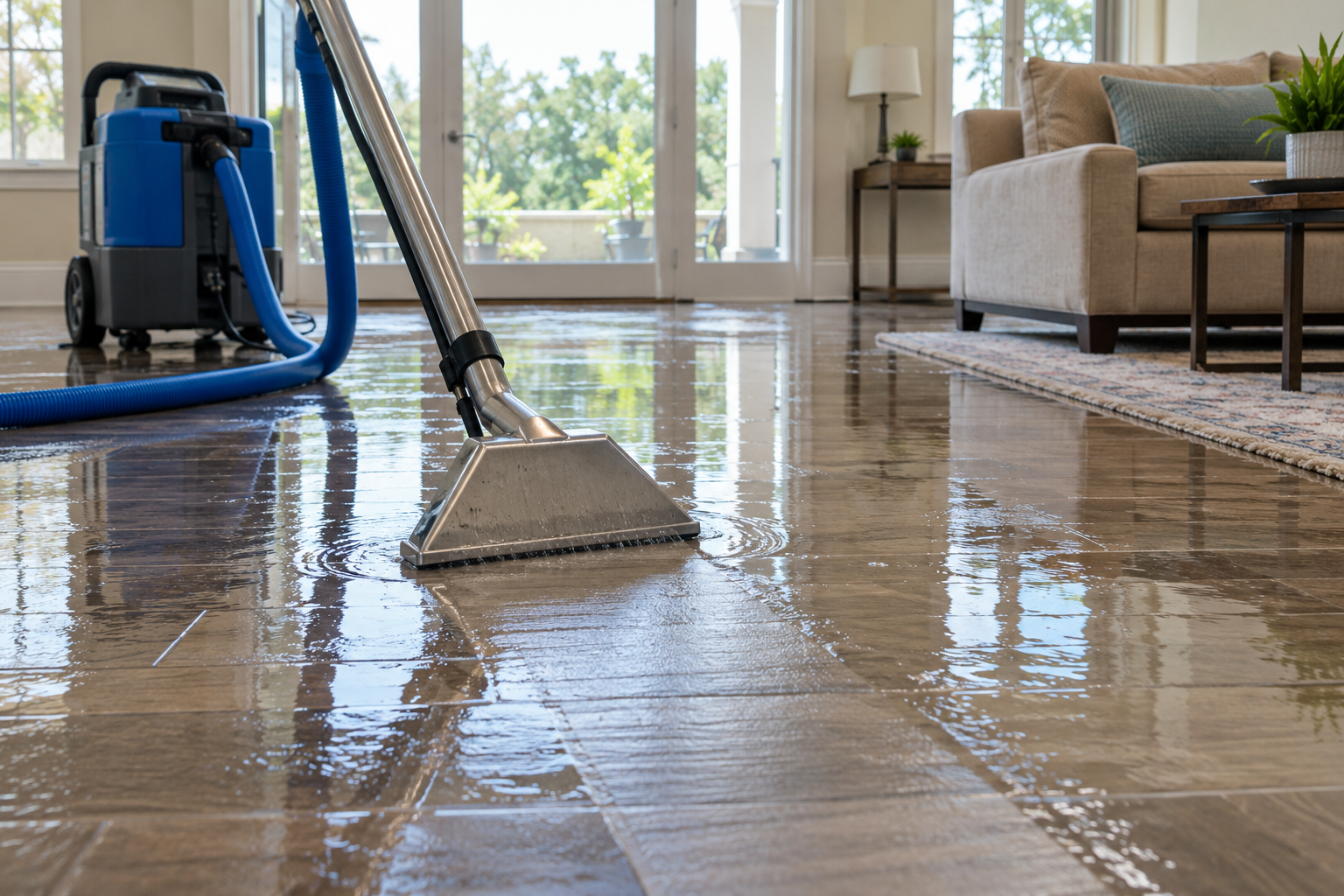
Extraction and drying answer different questions
Extraction removes water that equipment can recover from surfaces or affected materials. Drying addresses moisture that remains. The terms water removal and extraction often overlap; ask what the proposed work actually includes rather than relying on the label.
Ask how each affected material will be evaluated
| Affected area | What to ask |
|---|---|
| Carpet and pad | Will both layers and the underlying floor be evaluated? How do contamination and material condition affect the plan? |
| Hard flooring | Could water be beneath the finish or at edges? What evidence supports retaining or removing materials? |
| Cabinet bases and wall edges | How will inaccessible wet areas be checked? What access is needed and who authorizes it? |
| Contents | Which belongings need separate assessment, documentation or cleaning? Who records their condition? |
What to record before and after work
From a safe location, photograph the affected rooms and visible water paths before work changes them. Keep the estimate and authorization, note the areas treated and ask what remains unresolved. Do not describe a room as fully dry merely because extraction equipment has finished.
The drying guide explains the follow-up questions. For a homeowner-facing overview, read how to approach a flooded room.
The source changes the response
Tell the provider if the incident involves sewage, rising floodwater or used water from an appliance. Do not assume clear-looking water is clean. Use the water-type guide for the distinction and the appliance-leak guide for reporting supply versus drain observations.
If standing water is still spreading, start with water-removal planning. Keep people and pets away from unsafe areas while help is arranged.
For Tampa-specific next-step guidance, see the Tampa Water Damage Resource Center.