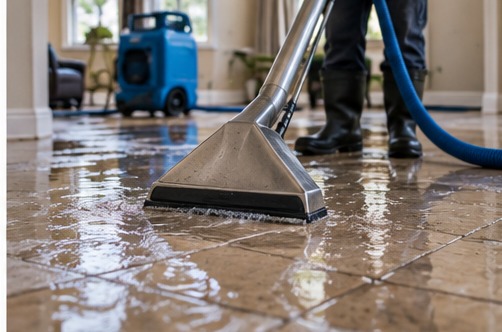
How to Dry a Flooded Room After Water Damage
Once the water source is controlled, drying becomes the priority. The goal is not simply to make the floor look dry, but to reduce moisture in materials that can hold water below the surface.
For active water damage, prioritize safety, stop the source if it is safe to do so, document the condition, and arrange appropriate water removal or restoration help.
1. Remove standing water safely
If there is standing water, keep electrical hazards in mind before moving equipment. For a manageable clean-water spill, towels and a wet/dry vacuum may help with small amounts. Larger areas often require dedicated extraction equipment.
Our water extraction page explains why removing water quickly matters.
2. Increase airflow after extraction
Fans and air movement can help evaporation, but airflow works best when the water has already been removed from floors and porous materials. Keep air moving through the affected space while monitoring how the materials respond.
3. Watch flooring, drywall, and cabinets
Carpet, padding, wood products, drywall, insulation, and cabinet bases can retain moisture after the surface appears dry. Warped flooring, swelling, soft drywall, musty odors, and persistent dampness are warning signs.
If moisture is suspected under flooring or inside walls, see our guide to hidden water damage signs.
4. Know when professional drying makes sense
A professional assessment is especially useful when a large area is affected, water has moved into walls or flooring, the source was contaminated, or drying has not progressed as expected. Proper drying may involve moisture measurements and commercial equipment.
For larger events, compare the steps in our water damage restoration process guide and water removal page.
For Tampa-specific next-step guidance, see the Tampa Water Damage Resource Center.
If you are dealing with active water damage, standing water, or a serious leak, calling is the fastest way to connect with restoration assistance.
(813) 227-6544CALL NOW FOR WATER DAMAGE HELP IN TAMPARelated next step: sewage-backup safety guide.
For moisture inside walls, flooring and insulation, read the complete water-damage drying guide.
Tampa Water Rescue is an independent informational and lead connection website. This article provides general information and is not insurance, legal, plumbing, mold, or emergency safety advice.
For a more specific situation, see our guide to appliance-leak source and damage checks.